 EN
EN


Group training sessions have evolved significantly over the past decade, with fitness professionals constantly seeking equipment that enhances engagement, provides scalable resistance, and delivers measurable results for participants of varying fitness levels. Hip bands have emerged as one of the most versatile and effective tools for group fitness environments, offering unique advantages that traditional equipment cannot match. These elastic resistance bands specifically designed for lower body training have revolutionized how instructors approach muscle activation, exercise progression, and participant inclusion in group settings.
Understanding the specific advantages of hip bands in group training requires examining how these tools address common challenges faced by fitness instructors and participants alike. From space constraints and equipment costs to the need for immediate exercise modifications and enhanced muscle engagement, hip bands provide practical solutions that benefit both trainers and trainees. The growing adoption of hip bands in commercial gyms, boutique fitness studios, and outdoor group training programs reflects their proven effectiveness in creating dynamic, inclusive, and results-driven workout experiences.
Enhanced Accessibility and Inclusivity for All Fitness Levels
Seamless Exercise Modifications for Diverse Participants
Hip bands excel in group training environments because they allow instructors to provide instant exercise modifications without disrupting the flow of the session. Unlike fixed-weight equipment that requires physical adjustments or complete exercise substitutions, hip bands enable participants to modify resistance simply by adjusting their grip position, changing their stance width, or selecting different band tensions. This flexibility ensures that beginners can participate alongside advanced participants in the same exercise sequence, maintaining group cohesion while meeting individual needs.
The progressive resistance nature of hip bands means that participants naturally encounter increased difficulty as they move through greater ranges of motion, providing an automatic scaling mechanism that adapts to individual strength levels. This characteristic is particularly valuable in group settings where instructors cannot provide constant individual attention. Participants learn to self-regulate their intensity by controlling their movement patterns and band tension, developing better body awareness and exercise autonomy throughout the training process.
Injury Prevention and Rehabilitation Integration
Group training with hip bands offers significant advantages for injury prevention and rehabilitation compared to traditional weight-bearing exercises. The elastic resistance provided by hip bands creates a more joint-friendly training environment, reducing impact stress while still delivering effective muscle activation. This makes group sessions more accessible to participants recovering from injuries or those with joint limitations who might otherwise avoid high-intensity group training.
The controlled resistance curve of hip bands helps participants maintain proper movement patterns throughout exercises, as the elastic tension provides feedback that encourages correct form. In group settings where individual form correction is challenging, hip bands serve as a built-in movement guide, helping participants develop muscle memory for proper hip hinge patterns, glute activation, and lateral movement mechanics.
Optimized Space Efficiency and Equipment Management
Maximized Training Area Utilization
The compact nature of hip bands provides exceptional space efficiency advantages in group training environments. Unlike bulky equipment that requires dedicated floor space and storage areas, hip bands allow instructors to conduct comprehensive lower body training sessions in minimal space. This efficiency enables fitness facilities to accommodate larger group sizes or conduct multiple simultaneous sessions without space conflicts, improving revenue potential and member satisfaction.
Hip bands eliminate the need for equipment rotation during group sessions, a common logistical challenge with traditional weights or machines. Participants can perform entire workout sequences with their bands, moving seamlessly between exercises without waiting for equipment availability or dealing with setup transitions. This continuous flow maintains training intensity and keeps participants engaged throughout the session, leading to better workout experiences and improved fitness outcomes.
Simplified Setup and Cleanup Procedures
The lightweight and portable nature of hip bands dramatically reduces setup and cleanup time for group training sessions. Instructors can distribute bands to participants within minutes and collect them just as quickly, eliminating the time-consuming equipment arrangement and sanitization procedures required with heavier equipment. This efficiency allows more time for actual training and reduces the staffing requirements for session management.
Storage considerations become virtually negligible with hip bands, as entire class sets can be stored in compact containers that require minimal storage space. This advantage is particularly valuable for facilities with limited storage capacity or for instructors who conduct sessions at multiple locations. The durability and low maintenance requirements of quality hip bands also reduce long-term equipment replacement costs compared to mechanical equipment that experiences wear from heavy group use.
Superior Muscle Activation and Training Specificity
Enhanced Glute and Hip Stabilizer Engagement
Hip bands provide unique muscle activation advantages that are particularly beneficial in group training contexts. The lateral resistance created by hip bands specifically targets the gluteus medius and other hip stabilizers that are often underactivated in traditional training exercises. This targeted activation is crucial for developing functional movement patterns and addressing common muscle imbalances that can lead to injury or performance limitations.
Research demonstrates that hip bands significantly increase electromyographic activity in key posterior chain muscles compared to bodyweight exercises alone. In group training sessions, this enhanced muscle activation means participants achieve greater training stimulus with relatively simple movements, making workouts more time-efficient and results-oriented. The constant tension provided by hip bands ensures continuous muscle engagement throughout entire exercise ranges of motion, maximizing training effectiveness.
Functional Movement Pattern Development
The resistance characteristics of hip bands closely mimic the demands of many athletic and daily living activities, making them ideal for functional training applications in group settings. Hip bands encourage proper hip abduction patterns, lateral stability, and coordinated lower body movement chains that translate directly to improved performance in sports and everyday activities. This functional relevance helps participants understand the practical value of their training efforts.
Group training with hip bands naturally emphasizes movement quality over quantity, as the elastic resistance provides immediate feedback when participants attempt to compensate with improper movement patterns. This built-in movement correction system helps groups develop better movement literacy collectively, creating a learning environment where participants can observe and learn from proper movement demonstrations while receiving continuous resistance feedback.
Cost-Effectiveness and Program Scalability
Reduced Equipment Investment Requirements
The economic advantages of hip bands in group training programs are substantial compared to traditional equipment investments. A complete set of hip bands for an entire group training class costs significantly less than purchasing equivalent resistance training equipment such as dumbbells, kettlebells, or resistance machines. This cost efficiency allows fitness facilities to offer high-quality resistance training programs without major capital expenditures, improving program profitability and accessibility.
The durability and longevity of quality hip bands provide excellent return on investment over time. Unlike mechanical equipment that requires regular maintenance, part replacement, or eventual complete replacement due to wear, properly constructed hip bands maintain their resistance properties and structural integrity through extensive use. This reliability reduces ongoing operational costs and ensures consistent training experiences for group participants.
Flexible Program Expansion Opportunities
Hip bands enable fitness facilities to quickly scale group training programs up or down based on demand without significant additional investment. Adding capacity for additional participants requires only purchasing additional bands rather than major equipment acquisitions or facility modifications. This scalability is particularly valuable for seasonal businesses or facilities experiencing membership growth.
The versatility of hip bands allows instructors to develop multiple specialized group training programs using the same basic equipment. Whether focusing on glute development, athletic performance, rehabilitation, or general fitness, hip bands provide the foundation for diverse program offerings that can attract different member segments without requiring separate equipment inventories for each program type.
FAQ
How many participants can effectively use hip bands in a single group training session?
The number of participants who can effectively use hip bands in a group session depends primarily on available space rather than equipment limitations. Since hip bands require minimal space per person and no shared equipment, instructors can typically accommodate 15-25 participants in a standard group fitness studio. The key factor is ensuring adequate space for lateral movements and exercise transitions while maintaining instructor visibility for form guidance and motivation.
What resistance levels should be available for group training with hip bands?
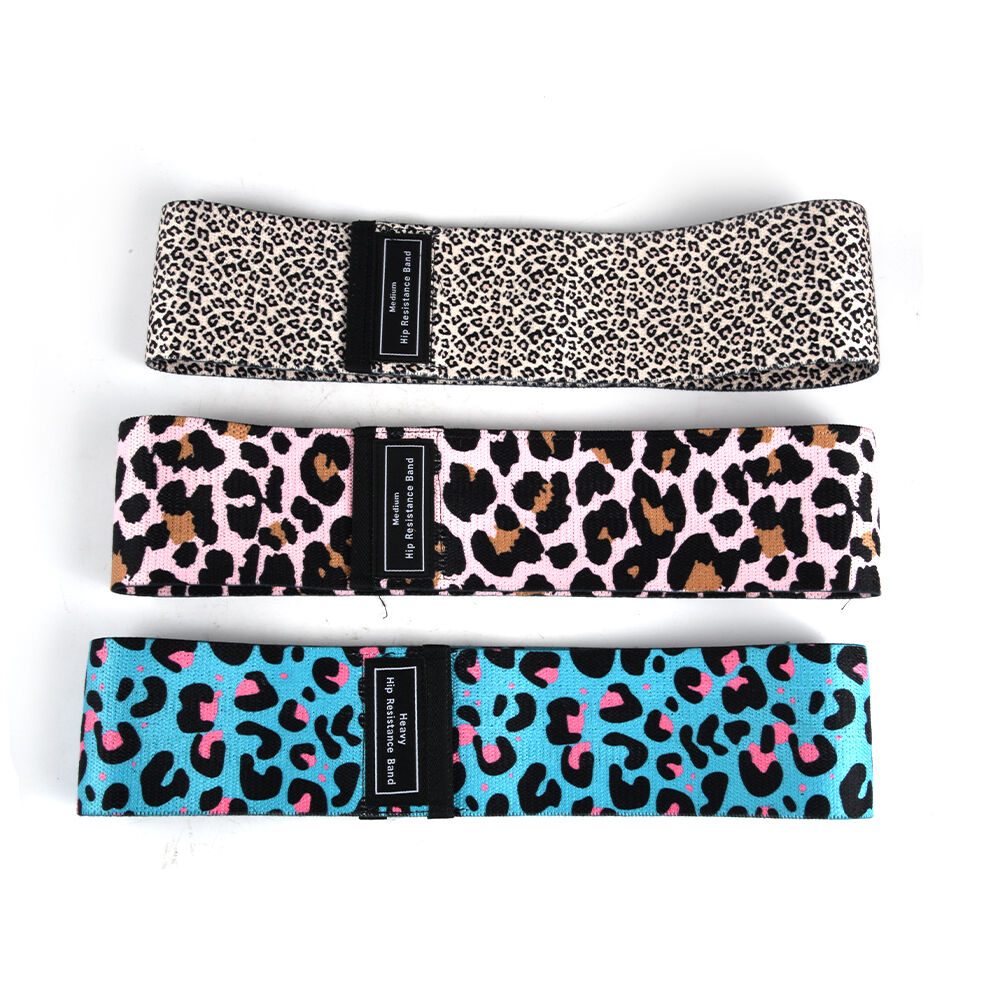
Successful group training programs should provide at least three resistance levels: light, medium, and heavy hip bands. This range accommodates the varying strength levels typically found in group settings and allows for exercise progression within sessions. Many facilities find that offering a fourth extra-heavy option serves advanced participants and those progressing through their fitness journey, while extra-light bands can accommodate rehabilitation participants or complete beginners.
How do hip bands compare to other resistance equipment for group training effectiveness?
Hip bands offer distinct advantages over other resistance equipment in group settings, particularly in terms of muscle activation specificity, space efficiency, and participant safety. While traditional weights provide different training stimuli, hip bands excel at targeting hip stabilizers and creating functional movement patterns that translate well to daily activities and athletic performance. The continuous tension and progressive resistance of hip bands also provide unique training benefits that complement rather than replace other forms of resistance training.
What safety considerations are important when using hip bands in group training?
Key safety considerations for group training with hip bands include proper band inspection before each session, ensuring participants understand correct placement and removal techniques, and monitoring for signs of band wear or damage. Instructors should educate participants about appropriate resistance levels to prevent overexertion and should demonstrate proper movement patterns to minimize injury risk. Quality hip bands with reinforced stitching and appropriate materials significantly reduce safety concerns compared to lower-grade alternatives.
Table of Contents
- Enhanced Accessibility and Inclusivity for All Fitness Levels
- Optimized Space Efficiency and Equipment Management
- Superior Muscle Activation and Training Specificity
- Cost-Effectiveness and Program Scalability
-
FAQ
- How many participants can effectively use hip bands in a single group training session?
- What resistance levels should be available for group training with hip bands?
- How do hip bands compare to other resistance equipment for group training effectiveness?
- What safety considerations are important when using hip bands in group training?