 EN
EN


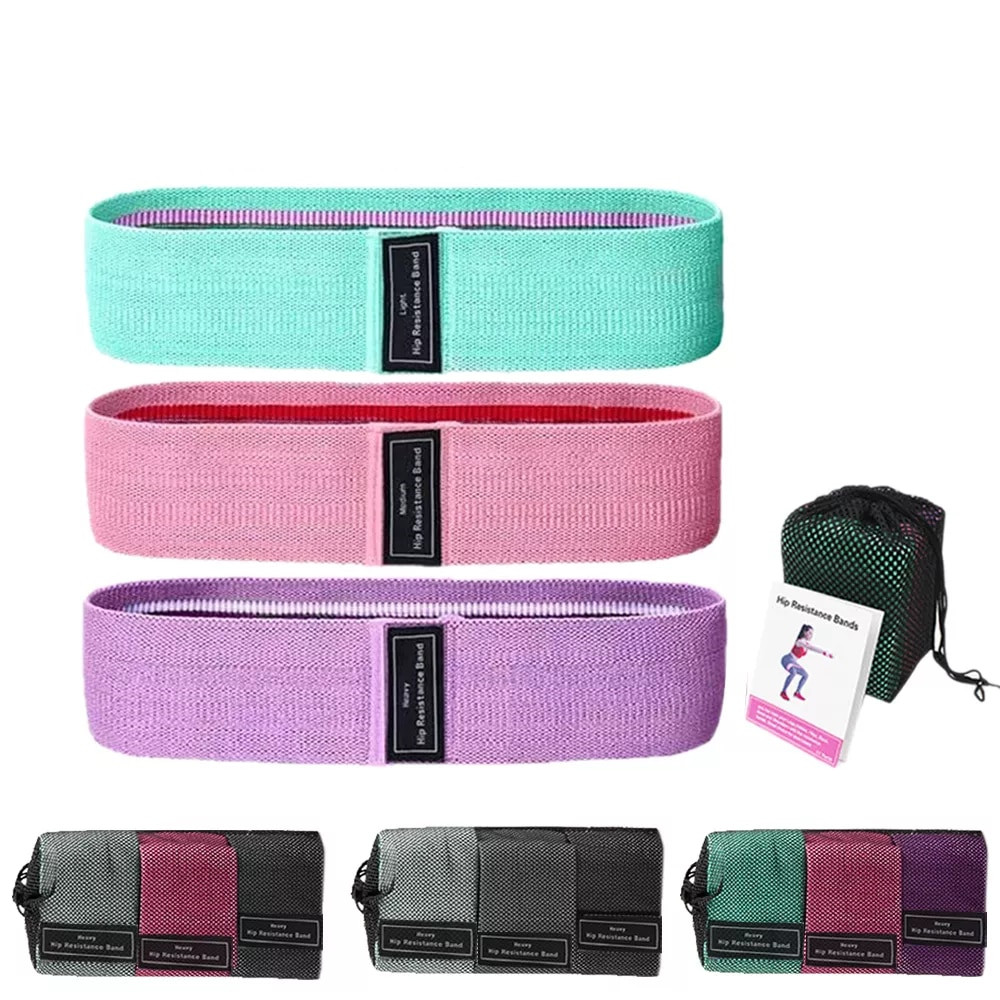
Hip bands have emerged as essential tools in modern functional training and rehabilitation programs, offering unique biomechanical advantages that traditional equipment cannot replicate. These versatile resistance tools provide variable tension throughout movement patterns, enabling practitioners to target specific muscle groups while promoting natural movement mechanics that translate directly to daily activities and athletic performance.
The contribution of hip bands to rehabilitation and functional movement extends beyond simple muscle strengthening, encompassing neuromuscular re-education, proprioceptive enhancement, and movement pattern correction. Physical therapists, strength coaches, and fitness professionals increasingly recognize how hip bands facilitate progressive loading while maintaining joint-friendly resistance curves that accommodate individual limitations and promote safe movement progression.
Biomechanical Principles Behind Hip Band Effectiveness
Variable Resistance Characteristics
Hip bands provide accommodating resistance that increases proportionally with the stretch applied to the elastic material. This variable resistance pattern differs significantly from traditional weights, where gravitational force remains constant throughout the range of motion. As muscles lengthen the band during eccentric phases, resistance gradually increases, providing optimal loading at end ranges where muscles are typically strongest.
The elastic properties of hip bands create a resistance curve that matches natural strength curves of many muscle groups, particularly those surrounding the hip complex. During hip abduction exercises, for example, the gluteus medius experiences peak activation when the band reaches maximum stretch, coinciding with the muscle's optimal length-tension relationship.
This accommodating resistance allows for smooth deceleration at movement endpoints, reducing joint stress while maintaining muscle tension throughout the entire range of motion. The continuous tension provided by hip bands ensures sustained muscle activation, promoting greater motor unit recruitment compared to free weights that may have momentum-assisted phases.
Neuromuscular Activation Patterns
Research demonstrates that hip bands significantly enhance neuromuscular activation patterns, particularly in stabilizing muscles around the hip joint. The unstable nature of elastic resistance requires constant muscular adjustments to maintain proper movement patterns, engaging both prime movers and stabilizing muscles simultaneously.
Hip bands activate deep stabilizing muscles that often remain dormant during traditional strength exercises. The gluteus medius, tensor fasciae latae, and deep hip rotators show increased electromyographic activity when exercises incorporate elastic resistance, contributing to improved hip stability and reduced injury risk.
The proprioceptive challenge created by hip bands enhances kinesthetic awareness and movement quality. Users must constantly adjust their positioning and muscle activation to control the elastic resistance, improving neuromuscular coordination and movement efficiency.
Functional Movement Applications
Multi-Planar Movement Integration
Hip bands excel in facilitating multi-planar movement patterns that mirror real-world activities and sport-specific demands. Unlike machine-based exercises that typically isolate movement to single planes, hip bands allow for complex, three-dimensional movement patterns that enhance functional strength and movement competency.
Sagittal plane exercises with hip bands, such as squats and lunges with band resistance, improve anterior-posterior stability while strengthening the entire kinetic chain. The addition of elastic resistance challenges the body to maintain proper alignment against varying forces, mimicking the demands of activities like climbing stairs or getting up from a chair.
Frontal plane movements utilizing hip bands, including lateral walks and side-stepping exercises, directly address movement deficiencies common in sedentary populations. These exercises strengthen the often-weak hip abductors and external rotators, improving lateral stability and reducing the risk of hip and knee injuries.
Closed-Chain Exercise Benefits
Hip bands naturally promote closed-chain exercise patterns where the distal segment remains in contact with a stable surface. This exercise type more closely resembles functional activities and provides superior carryover to daily movement patterns compared to open-chain alternatives.
Closed-chain exercises with hip bands enhance co-contraction of agonist and antagonist muscle groups, improving joint stability and movement control. The simultaneous activation of multiple muscle groups during band-resisted squats, for example, better prepares the neuromuscular system for complex movement demands.
The ground reaction forces generated during closed-chain hip band exercises provide valuable proprioceptive feedback, enhancing body awareness and movement precision. This sensory input is crucial for developing movement competency and reducing injury risk during functional activities.
Rehabilitation Exercise Integration
Progressive Loading Strategies
Hip bands offer exceptional versatility in rehabilitation settings through their ability to provide precisely graded resistance levels. The elastic properties allow for micro-adjustments in resistance by simply altering band pre-tension or grip position, enabling therapists to progress patients safely through rehabilitation phases.
Early-phase rehabilitation benefits from the accommodating resistance of hip bands, which provides minimal resistance at shortened muscle lengths where injured tissues are most vulnerable. As healing progresses, the same band can provide greater challenge through increased stretch or exercise progression, eliminating the need for multiple equipment pieces.
The ability to perform isometric holds at any point in the range of motion makes hip bands particularly valuable for pain-free strengthening during acute rehabilitation phases. Patients can work within comfortable ranges while still achieving therapeutic muscle activation, promoting healing while preventing further injury.
Movement Pattern Correction
Hip bands serve as effective tools for correcting faulty movement patterns commonly seen in rehabilitation populations. The continuous resistance provided by bands helps retrain proper movement mechanics by providing tactile feedback when patients deviate from optimal alignment.
Trendelenburg gait patterns, characterized by hip drop during single-leg stance, can be effectively addressed through hip band exercises that specifically target hip abductor weakness. The resistance provided by bands during lateral movements helps strengthen the gluteus medius while providing immediate feedback about proper hip positioning.
Knee valgus collapse, common in both rehabilitation and athletic populations, can be corrected through hip band exercises that promote hip external rotation and abduction. The external cue provided by band resistance helps patients develop proper movement patterns that transfer to functional activities.
Specific Exercise Applications and Progressions
Lower Extremity Strengthening Protocols
Hip bands provide comprehensive strengthening options for the entire lower extremity kinetic chain. Gluteal strengthening exercises with bands, including clamshells, bridges, and lateral walks, target specific muscle weaknesses while promoting functional movement patterns.
Hip flexor strengthening, often neglected in traditional programs, becomes accessible through band-resisted marching and leg raise variations. These exercises address anterior hip weakness while improving hip flexor endurance crucial for gait and stair climbing activities.
Quadriceps and hamstring strengthening can be enhanced through band-assisted squats and deadlift patterns that provide variable resistance throughout the movement. The elastic resistance challenges muscles at end ranges where they are typically strongest, promoting strength gains across the entire range of motion.
Core Stability Integration
Hip bands naturally integrate core stability challenges into lower extremity exercises, creating comprehensive training effects that address multiple movement system components simultaneously. The unstable resistance requires constant core engagement to maintain proper spinal alignment during exercises.
Anti-rotation exercises utilizing hip bands challenge the core musculature to resist rotational forces while maintaining neutral spine position. These exercises develop the functional core strength necessary for activities requiring simultaneous limb movement and trunk stability.
The three-dimensional nature of band resistance creates multi-planar core challenges that better prepare individuals for real-world movement demands. This integrated approach develops core strength that transfers effectively to functional activities and athletic performance.
Clinical Evidence and Therapeutic Outcomes
Research-Supported Benefits
Scientific literature consistently demonstrates the effectiveness of hip bands in improving functional outcomes across diverse populations. Studies show significant improvements in hip abductor strength, balance, and functional movement quality following hip band intervention programs.
Electromyographic studies reveal that hip bands produce comparable or superior muscle activation levels compared to traditional strengthening methods while reducing joint loading forces. This combination of high muscle activation with low joint stress makes hip bands particularly valuable for rehabilitation applications.
Long-term follow-up studies indicate that improvements gained through hip band training demonstrate good retention rates, suggesting that the neuromuscular adaptations achieved through elastic resistance training have lasting functional benefits.
Population-Specific Applications
Elderly populations benefit significantly from hip band exercises due to their low-impact nature and ability to improve fall-related risk factors. The resistance provided by bands helps maintain bone density while improving balance and functional mobility without excessive joint loading.
Athletic populations utilize hip bands for injury prevention and performance enhancement, particularly addressing the lateral movement deficiencies common in sports requiring cutting and change-of-direction activities. The sport-specific movement patterns achievable with bands provide excellent training transfer.
Post-surgical rehabilitation protocols increasingly incorporate hip bands due to their ability to provide controlled loading during early recovery phases. The adjustable resistance allows for safe progression through healing stages while maintaining muscle activation and preventing disuse atrophy.
FAQ
How quickly can I expect to see results from hip band exercises in rehabilitation?
Most individuals begin experiencing improvements in muscle activation and movement quality within 2-3 weeks of consistent hip band training. Strength gains typically become noticeable after 4-6 weeks, while functional improvements in daily activities often occur within the first month. However, individual results vary based on injury severity, adherence to exercise protocols, and baseline fitness levels.
Can hip bands replace traditional weights in functional training programs?
While hip bands provide excellent benefits for functional training and rehabilitation, they work best as part of a comprehensive program rather than a complete replacement for traditional weights. Hip bands excel at providing variable resistance and accommodating load, while free weights offer consistent resistance and progressive overload capabilities. The combination of both training modalities typically produces optimal results.
Are there any contraindications for using hip bands in rehabilitation exercises?
Hip bands are generally safe for most rehabilitation applications, but certain conditions require caution. Acute inflammatory conditions, recent surgical sites with movement restrictions, and severe osteoporosis may contraindicate certain band exercises. Always consult with a qualified healthcare professional before beginning any rehabilitation program, and discontinue exercises that cause pain or discomfort.
What resistance level should beginners start with when using hip bands?
Beginners should start with light to medium resistance hip bands that allow for 12-15 repetitions with proper form while experiencing moderate challenge by the final repetitions. The resistance should enable pain-free movement through the full range of motion without compensatory movement patterns. As strength and movement quality improve, resistance can be progressively increased by using stronger bands or increasing pre-tension.
Table of Contents
- Biomechanical Principles Behind Hip Band Effectiveness
- Functional Movement Applications
- Rehabilitation Exercise Integration
- Specific Exercise Applications and Progressions
- Clinical Evidence and Therapeutic Outcomes
-
FAQ
- How quickly can I expect to see results from hip band exercises in rehabilitation?
- Can hip bands replace traditional weights in functional training programs?
- Are there any contraindications for using hip bands in rehabilitation exercises?
- What resistance level should beginners start with when using hip bands?