 EN
EN


Hip bands have revolutionized the way fitness enthusiasts approach glute activation and lower body strengthening workouts. These simple yet highly effective resistance tools have gained tremendous popularity among personal trainers, physical therapists, and home fitness practitioners for their unique ability to target the gluteal muscles with precision and control. The surge in popularity of hip bands stems from their capacity to provide targeted muscle activation that traditional exercises often fail to achieve, making them indispensable for anyone serious about developing stronger, more shapely glutes.
The widespread adoption of hip bands in fitness routines reflects a deeper understanding of glute muscle mechanics and the importance of proper activation patterns. Unlike conventional weights that primarily work muscles through linear movements, hip bands create lateral resistance that specifically challenges the gluteus medius and minimus muscles, which are crucial for hip stability and lower body strength. This targeted approach has made hip bands a cornerstone of modern glute training programs, offering benefits that extend far beyond aesthetic improvements to include enhanced athletic performance, injury prevention, and functional movement quality.
The Science Behind Hip Band Effectiveness for Glute Development
Muscle Activation Patterns and Neural Drive Enhancement
Hip bands excel at creating optimal muscle activation patterns through their unique resistance profile that challenges the glutes throughout the entire range of motion. Research in exercise physiology demonstrates that hip bands generate peak tension when the glutes are in their strongest position, which occurs during hip extension and abduction movements. This resistance curve perfectly matches the natural strength curve of the gluteal muscles, ensuring maximum motor unit recruitment and enhanced neural drive to the target muscles.
The constant tension provided by hip bands forces the glutes to maintain activation throughout exercises, preventing the relaxation phases that commonly occur with traditional weight training. This sustained activation pattern promotes greater time under tension, a key factor in muscle hypertrophy and strength development. Studies show that exercises performed with hip bands can increase gluteus medius activation by up to 40% compared to bodyweight variations of the same movements, highlighting their effectiveness for targeted muscle development.
Biomechanical Advantages in Movement Quality
The biomechanical benefits of hip bands extend beyond simple resistance provision to include improvement in movement quality and joint stability. When properly positioned around the thighs or ankles, hip bands create an external cue that encourages proper knee tracking and hip alignment during squats, lunges, and other compound movements. This external feedback mechanism helps trainees maintain optimal form while simultaneously strengthening the muscles responsible for maintaining that form.
Hip bands also promote balanced muscle development by addressing common strength imbalances between the dominant and non-dominant sides of the body. The bilateral nature of most hip band exercises ensures that both legs work equally hard, preventing compensation patterns that can develop with unilateral training methods. This balanced approach to glute development is particularly valuable for athletes and individuals recovering from lower body injuries.
Versatility and Accessibility Driving Widespread Adoption
Home Workout Integration and Convenience Factors
The popularity of hip bands has surged due to their exceptional convenience and portability, making effective glute training accessible regardless of location or equipment availability. Unlike bulky gym equipment or heavy weights, hip bands can be easily stored in a small bag and used virtually anywhere, from hotel rooms to outdoor spaces. This portability factor became especially significant during the global shift toward home-based fitness routines, where space and equipment limitations made traditional strength training challenging.
The minimal space requirements for hip band workouts have democratized access to effective glute training, allowing individuals to maintain consistent training routines without gym memberships or expensive equipment investments. A complete glute workout can be performed in a space as small as a yoga mat, making hip bands ideal for urban dwellers, frequent travelers, and anyone seeking efficient home workout solutions. This accessibility has contributed significantly to their widespread adoption across diverse demographic groups.
Progressive Resistance and Adaptable Training Protocols
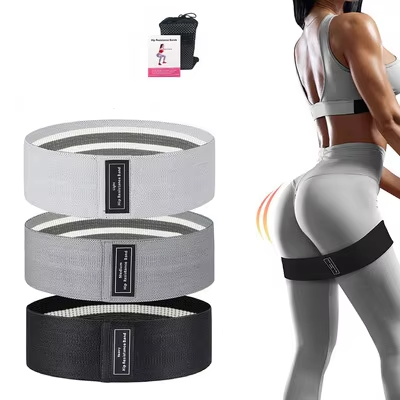
Hip bands offer exceptional versatility in resistance levels and exercise variations, accommodating users from beginner to advanced fitness levels. Most hip band sets include multiple resistance levels, typically ranging from light to heavy tensions, allowing for progressive overload as strength improves. This scalability ensures that hip bands remain challenging and effective throughout different phases of a training program, from initial glute activation work to advanced strength building protocols.
The adaptability of hip bands extends to their integration with various training methodologies, including high-intensity interval training, rehabilitation protocols, warm-up routines, and strength training circuits. Physical therapists frequently incorporate hip bands into corrective exercise programs for addressing gluteal amnesia, hip weakness, and movement dysfunction. Personal trainers utilize hip bands for activation work before heavy lifting sessions and as finishing exercises to maximize muscle fatigue and growth stimulus.
Targeted Glute Shaping Benefits and Aesthetic Outcomes
Comprehensive Gluteal Muscle Development
Hip bands excel at providing comprehensive development of all three gluteal muscles through targeted exercise variations that address each muscle's specific function and fiber orientation. The gluteus maximus, the largest muscle in the human body, responds exceptionally well to hip band exercises that emphasize hip extension and external rotation movements. Hip thrust variations performed with hip bands create intense activation of the gluteus maximus while simultaneously engaging the supporting hip stabilizers.
The gluteus medius and minimus, often overlooked in traditional training programs, receive focused attention through hip band exercises that emphasize lateral movements and hip abduction. These smaller but crucial muscles are responsible for creating the rounded, lifted appearance that many seek from glute training. Hip bands allow for precise targeting of these muscles through side-lying abductions, clamshells, and lateral walks that would be difficult to replicate with traditional weights.
Functional Strength Translation and Real-World Applications
The strength and stability gains achieved through hip band training translate directly to improved performance in daily activities and athletic pursuits. The multi-planar resistance provided by hip bands closely mimics the demands placed on the glutes during walking, running, climbing stairs, and changing directions. This functional carryover makes hip bands particularly valuable for individuals seeking strength that enhances their quality of life beyond the gym environment.
Athletes across various sports have embraced hip bands as essential tools for improving power output, reducing injury risk, and enhancing movement efficiency. The lateral stability and hip strength developed through hip band training directly contribute to improved performance in sports requiring quick direction changes, such as basketball, tennis, and soccer. This performance enhancement aspect has driven adoption among competitive athletes and weekend warriors alike.
Integration with Modern Fitness Trends and Training Philosophy
Alignment with Evidence-Based Training Approaches
The rise in hip bands popularity coincides with the fitness industry's shift toward evidence-based training methodologies that prioritize movement quality, injury prevention, and functional strength development. Modern exercise science emphasizes the importance of glute activation and hip stability for overall lower body health, making hip bands essential tools for implementing these research-backed training principles. The ability of hip bands to provide measurable improvements in glute activation has made them favorites among evidence-based practitioners.
Hip bands align perfectly with contemporary training philosophies that emphasize quality over quantity, focusing on precise muscle activation rather than simply moving heavy weights. This approach resonates with fitness enthusiasts who understand that effective training requires targeted muscle engagement and proper movement patterns. The immediate feedback provided by hip bands helps trainees develop better body awareness and movement control, fundamental aspects of modern fitness education.
Social Media Influence and Fitness Community Adoption
The visual appeal and effectiveness of hip band exercises have made them highly shareable content on social media platforms, contributing significantly to their popularity growth. Fitness influencers and trainers regularly showcase hip band workouts, demonstrating their versatility and effectiveness to millions of followers. The compact nature of hip bands makes them ideal for creating engaging workout content that viewers can easily replicate at home.
The community aspect of hip band training has fostered a supportive environment where users share progress, techniques, and motivation. Online fitness communities have embraced hip bands as accessible tools for achieving common goals, creating a sense of shared experience and accountability. This social component has amplified the popularity of hip bands beyond their functional benefits to include their role in building fitness communities and supporting lifestyle changes.
FAQ
How often should I use hip bands for optimal glute development results?
For optimal glute development, hip bands should be used 3-4 times per week, allowing at least one day of rest between intensive sessions. Beginners can start with 2-3 sessions per week, focusing on proper form and gradual progression. Hip bands can be incorporated into warm-up routines daily, as light activation work doesn't require extensive recovery time. The key is consistency and progressive overload, gradually increasing resistance levels and exercise complexity as strength improves.
Can hip bands replace traditional weight training for glute development?
While hip bands are highly effective for glute activation and development, they work best as part of a comprehensive training program rather than a complete replacement for traditional weights. Hip bands excel at targeting stabilizing muscles and providing constant tension, while heavy compound movements like squats and deadlifts are superior for maximum strength and size gains. The ideal approach combines both methods, using hip bands for activation work and targeted exercises alongside progressive overload with weights.
What resistance level should beginners start with when using hip bands?
Beginners should start with light to medium resistance hip bands that allow them to complete 12-15 repetitions with proper form while feeling moderate muscle fatigue by the final few repetitions. The resistance should be challenging enough to activate the glutes effectively but not so heavy that it compromises exercise form or causes excessive muscle soreness. Most beginners find success starting with the lightest band in a set and progressing to medium resistance within 2-3 weeks of consistent training.
Are there any safety considerations when using hip bands for glute workouts?
Hip bands are generally very safe when used properly, but several considerations should be observed for optimal safety and effectiveness. Always inspect bands for wear, tears, or weak spots before use, as damaged bands can snap unexpectedly. Position bands properly to avoid rolling or bunching, which can cause discomfort or reduce effectiveness. Start with lighter resistance and shorter sessions to allow muscles and joints to adapt gradually. Individuals with existing hip, knee, or lower back issues should consult with a healthcare provider before beginning intensive hip band training programs.