 EN
EN


Choosing the right mini loop bands for different fitness levels requires understanding resistance levels, material quality, and how band specifications align with individual strength capabilities and workout goals. Whether you're selecting bands for beginners just starting their fitness journey or advanced athletes seeking challenging resistance training, the key lies in matching band characteristics to user requirements and progression needs.
The selection process involves evaluating resistance strength, band circumference, material durability, and versatility across different exercise types. Mini loop bands come in various resistance levels that directly correspond to different fitness capabilities, making proper selection crucial for effective workouts and injury prevention. Understanding these factors ensures that users can progress safely while maximizing their training effectiveness.
Understanding Resistance Levels and Fitness Level Matching
Beginner Resistance Requirements
Beginner fitness enthusiasts typically require mini loop bhttps://www.yslatex.com/mini-loop-bandands with light to medium resistance levels, usually ranging from 10-25 pounds of resistance force. These resistance levels allow newcomers to focus on proper form and movement patterns without overwhelming their muscles or joints. Light resistance bands help beginners activate muscle groups effectively while building foundational strength and establishing consistent exercise habits.
When selecting mini loop bands for beginners, prioritize bands that offer gentle resistance during basic movements like glute bridges, lateral walks, and arm circles. The resistance should challenge the muscles without causing excessive fatigue or compromising exercise form. Beginners benefit most from bands that allow them to complete 12-15 repetitions with proper technique while feeling moderate muscle engagement.
Material considerations for beginner mini loop bands include softer latex or fabric-covered options that provide comfort against the skin during extended use. The band width should typically measure 2-3 inches to distribute pressure evenly and prevent digging into the skin. Circumference around 12 inches works well for most beginner exercises and body sizes.
Intermediate Resistance Specifications
Intermediate users who have developed basic strength and exercise familiarity require mini loop bands offering medium to heavy resistance, typically ranging from 25-45 pounds of resistance force. These individuals can handle increased tension while maintaining proper form and benefit from bands that provide progressive overload opportunities. Intermediate mini loop bands should challenge stabilizing muscles while supporting compound movement patterns.
The ideal intermediate mini loop bands feature consistent resistance throughout the full range of motion and maintain their tension properties over extended use. These bands should accommodate exercises like monster walks, clamshells, and upper body activation movements with sufficient resistance to promote continued strength development. Band thickness typically increases to 0.5-0.7mm to provide durability under higher tension demands.
Intermediate users benefit from mini loop bands with slightly larger circumferences, around 13-14 inches, to accommodate various exercise positions and body mechanics. The material should resist rolling or bunching during dynamic movements while maintaining consistent width throughout the band's circumference.
Advanced Resistance Characteristics
Advanced fitness enthusiasts and athletes require mini loop bands with heavy to extra-heavy resistance levels, often exceeding 45-60 pounds of resistance force. These high-performance bands must withstand intense training sessions while providing sufficient resistance to challenge well-developed muscle groups. Advanced mini loop bands serve as effective tools for activation, rehabilitation, and strength enhancement in sophisticated training programs.
Premium mini loop bands for advanced users feature reinforced construction, often incorporating multiple latex layers or specialized rubber compounds that maintain elasticity under extreme tension. The band thickness typically ranges from 0.8-1.2mm to ensure durability during explosive movements and high-repetition training sessions. These bands must resist snapping or losing tension even when stretched to their maximum safe extension.
Advanced mini loop bands often feature wider designs, measuring 3-4 inches in width, to distribute high resistance forces more effectively and provide enhanced comfort during intensive training. The circumference may vary between 12-15 inches depending on the specific exercise applications and user preferences for different movement ranges.
Material Quality Assessment for Different User Needs
Natural Latex vs Synthetic Materials
Natural latex mini loop bands provide superior elasticity, durability, and consistent resistance characteristics that make them ideal for serious fitness enthusiasts across all levels. Natural latex offers excellent snap-back properties, maintaining its original shape and tension even after thousands of stretching cycles. These bands typically last longer than synthetic alternatives while providing more predictable resistance curves during exercises.
However, natural latex mini loop bands may trigger allergic reactions in sensitive individuals, making synthetic alternatives necessary for some users. Synthetic rubber compounds and fabric-covered options provide hypoallergenic alternatives while still delivering effective resistance training capabilities. The choice between natural latex and synthetic materials often depends on individual sensitivities, budget considerations, and intended use frequency.
Premium mini loop bands often combine natural latex cores with fabric coverings to provide the benefits of both materials. This construction offers excellent resistance properties from the latex while providing comfort and allergy protection from the fabric exterior. These hybrid designs work well for users at all fitness levels who prioritize both performance and comfort.
Thickness and Durability Considerations
Band thickness directly correlates with durability and resistance capacity, making it a crucial selection factor for different fitness levels. Thinner mini loop bands, typically 0.3-0.5mm, work well for beginners and light resistance applications but may not withstand the demands of advanced training. Medium thickness bands, ranging from 0.5-0.8mm, provide balanced durability and resistance suitable for intermediate users.
Thick mini loop bands, exceeding 0.8mm, offer maximum durability for intensive training but may feel overly stiff for beginners or those performing high-repetition exercises. The thickness selection should match the user's strength level and intended exercise intensity to ensure optimal performance and longevity. Thicker bands generally provide more consistent resistance but require greater initial force to achieve stretching.
Quality mini loop bands feature uniform thickness throughout their circumference, preventing weak spots that could lead to premature failure. Premium bands often incorporate reinforced seam areas or seamless construction to eliminate potential failure points. Users should inspect band thickness consistency when evaluating different options.
Surface Texture and Grip Features
Surface texture significantly impacts user experience and exercise effectiveness across different fitness levels. Smooth mini loop bands work well for beginners who primarily perform simple glute and leg exercises, as they slide easily against skin and clothing. However, smooth surfaces may slip during more dynamic movements or when users perspire during intense workouts.
Textured mini loop bands feature raised patterns, ribbing, or grip-enhancing surfaces that prevent slipping during challenging exercises. These textured surfaces prove particularly valuable for intermediate and advanced users who perform complex movements or train in humid conditions. The texture should enhance grip without causing skin irritation during extended use.
Some premium mini loop bands incorporate anti-slip coatings or specialized surface treatments that maintain grip properties even when wet. These features benefit users at all fitness levels who engage in sweaty workouts or outdoor training sessions where moisture could compromise band stability.
Size and Circumference Selection Guidelines
Standard Size Compatibility
Most mini loop bands feature circumferences between 10-15 inches when laid flat, creating loop diameters of approximately 6-9 inches. This size range accommodates the majority of users across different body types and exercise applications. Standard 12-inch circumference mini loop bands work effectively for leg exercises, glute activation, and upper body movements for most individuals.
Beginners often benefit from slightly larger circumferences, around 13-14 inches, as these sizes provide more comfortable positioning and reduce the initial stretching force required to achieve proper exercise positions. Larger circumferences allow beginners to focus on movement quality rather than struggling against excessive resistance from overly tight band positioning.
The standard size compatibility extends to exercise variety, with 12-13 inch circumference mini loop bands supporting the widest range of movements across different muscle groups. These sizes work effectively for lateral walks, glute bridges, arm exercises, and core stabilization movements without requiring excessive stretching or creating uncomfortable pressure points.
Body Type and Exercise Range Considerations
Individual body dimensions significantly influence optimal mini loop band sizing, particularly for users with larger or smaller frame sizes. Taller individuals or those with broader shoulders may require larger circumference bands to accommodate their natural limb spacing and movement ranges. Conversely, smaller-framed users might find standard sizes too loose for effective resistance.
Exercise-specific sizing considerations affect band selection for different fitness levels. Upper body exercises often require larger circumferences to accommodate shoulder width and arm positioning, while lower body exercises may work effectively with smaller circumferences that maintain tension throughout the movement range. Users should consider their primary exercise focus when selecting band sizes.
Some mini loop bands feature adjustable sizing through multiple loop configurations or variable positioning options. These versatile designs allow users to customize the effective circumference based on specific exercises or body positioning requirements. Adjustable options work well for households with multiple users of different fitness levels and body sizes.
Multi-Size Set Benefits
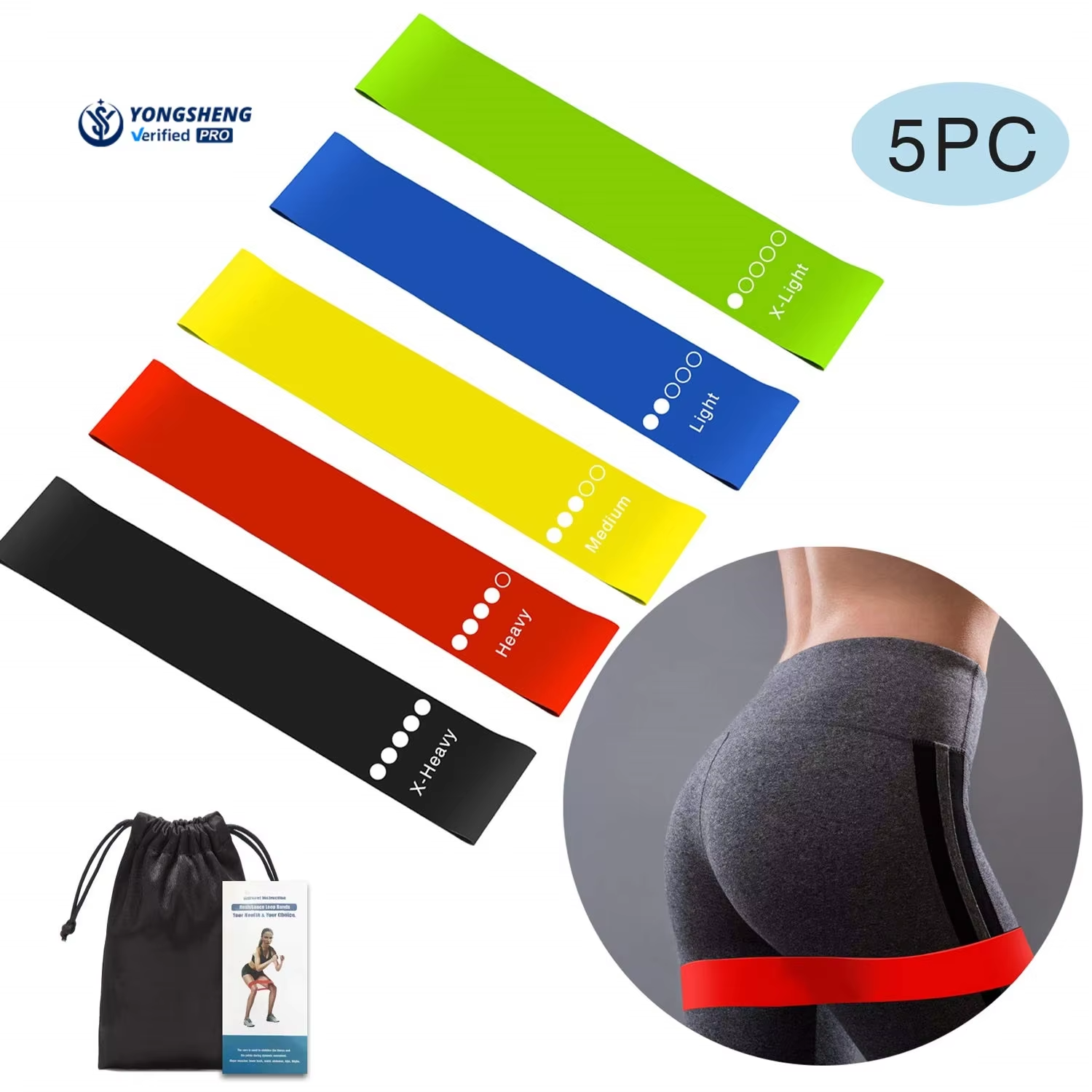
Multi-size mini loop band sets provide comprehensive solutions for users across all fitness levels by including various circumferences and resistance levels in a single package. These sets typically include 3-5 different bands ranging from light to heavy resistance, allowing users to progress systematically as their strength develops. The variety ensures appropriate resistance for different muscle groups and exercise types.
Progressive training becomes more effective with multi-size sets, as users can gradually increase resistance by moving to stronger bands or combining multiple bands for enhanced challenge. This progression system works particularly well for intermediate users transitioning toward advanced fitness levels. The sets also accommodate varying daily energy levels and recovery states.
Cost-effectiveness represents another advantage of multi-size mini loop band sets, as purchasing complete sets often costs less than buying individual bands separately. These sets also ensure compatibility between different resistance levels, with consistent materials, sizing, and construction quality across all included bands.
Exercise Application and Versatility Factors
Lower Body Exercise Compatibility
Lower body exercises represent the primary application for mini loop bands, requiring specific resistance and sizing characteristics to maximize effectiveness across different fitness levels. Beginner-level mini loop bands should provide adequate resistance for glute bridges, clamshells, and basic lateral walks while allowing proper form development. The resistance should activate target muscles without overwhelming stabilizing muscle groups.
Intermediate users require mini loop bands that support more challenging lower body movements like monster walks, single-leg glute bridges, and dynamic lateral movements. These exercises demand consistent resistance throughout larger ranges of motion and the ability to maintain band positioning during dynamic movements. The bands must resist rolling or bunching that could interrupt exercise flow.
Advanced lower body applications often involve plyometric movements, single-limb exercises, and complex movement patterns that place significant demands on mini loop bands. Heavy-duty construction becomes essential for exercises like lateral bounds, single-leg squats with band resistance, and explosive lateral movements. The bands must maintain integrity under rapid stretching and high force applications.
Upper Body and Core Integration
While primarily designed for lower body exercises, quality mini loop bands also support upper body and core training applications across all fitness levels. Upper body exercises typically require larger circumferences to accommodate shoulder width and arm positioning during movements like arm circles, external rotations, and chest expansions. The resistance levels for upper body work often differ from lower body requirements due to strength differences between muscle groups.
Core stabilization exercises benefit from mini loop bands that maintain consistent tension while allowing controlled movements in multiple directions. Exercises like dead bugs with band resistance, modified planks, and rotational movements require bands that won't slip or lose tension during subtle position adjustments. The band material should resist rolling or twisting that could compromise core engagement.
Integration of upper body and core exercises into mini loop band routines provides comprehensive workout options for users at all fitness levels. The versatility allows for full-body training sessions using a single piece of equipment, making mini loop bands valuable for home workouts, travel fitness, and supplemental training programs.
Rehabilitation and Physical Therapy Applications
Mini loop bands serve important roles in rehabilitation and physical therapy protocols, requiring specific characteristics to support recovery and injury prevention across different patient populations. Rehabilitation applications often demand very light resistance levels and exceptional comfort to accommodate healing tissues and limited mobility ranges. The bands must provide gentle resistance that promotes blood flow and muscle activation without causing pain or re-injury.
Physical therapy mini loop bands should feature consistent resistance curves that allow therapists and patients to predict force requirements throughout movement ranges. This predictability enables precise exercise prescription and progression monitoring. The bands must maintain their resistance properties over extended use periods, as rehabilitation programs often involve high repetition counts over many weeks or months.
Comfort features become particularly important for rehabilitation applications, as patients may have sensitive skin or areas of tenderness around injury sites. Fabric-covered or extra-soft materials help prevent skin irritation during extended therapy sessions. The bands should also resist latex odors or chemical smells that could cause discomfort in clinical environments.
FAQ
What resistance level should beginners choose for their first mini loop bands?
Beginners should start with light to medium resistance mini loop bands providing 10-25 pounds of resistance force. This range allows proper form development while providing sufficient muscle activation. Light resistance helps newcomers learn movement patterns safely while building foundational strength before progressing to heavier bands.
How do I determine the right mini loop band size for my body type?
Choose mini loop bands with 12-13 inch circumferences for average body sizes, adjusting larger for broader frames or longer limbs. Consider your primary exercise focus, as upper body movements may require larger circumferences than lower body exercises. Test the band positioning to ensure comfortable fit without excessive stretching or looseness during your intended movements.
Can mini loop bands replace weights for strength training at different fitness levels?
Mini loop bands provide excellent supplemental resistance training but work best combined with traditional weights rather than as complete replacements. They excel at activation exercises, rehabilitation, and targeted muscle isolation across all fitness levels. Advanced users can achieve significant training benefits, but progressive overload limitations make bands most effective as part of comprehensive training programs.
How often should mini loop bands be replaced based on fitness level usage?
Replacement frequency depends on usage intensity and material quality, with beginner-level usage typically requiring replacement every 12-18 months. Intermediate users may need replacement every 8-12 months, while advanced users performing intensive training might require new bands every 6-8 months. Quality indicators include resistance loss, visible wear, or surface degradation that affects grip and comfort.
Table of Contents
- Understanding Resistance Levels and Fitness Level Matching
- Material Quality Assessment for Different User Needs
- Size and Circumference Selection Guidelines
- Exercise Application and Versatility Factors
-
FAQ
- What resistance level should beginners choose for their first mini loop bands?
- How do I determine the right mini loop band size for my body type?
- Can mini loop bands replace weights for strength training at different fitness levels?
- How often should mini loop bands be replaced based on fitness level usage?