 EN
EN


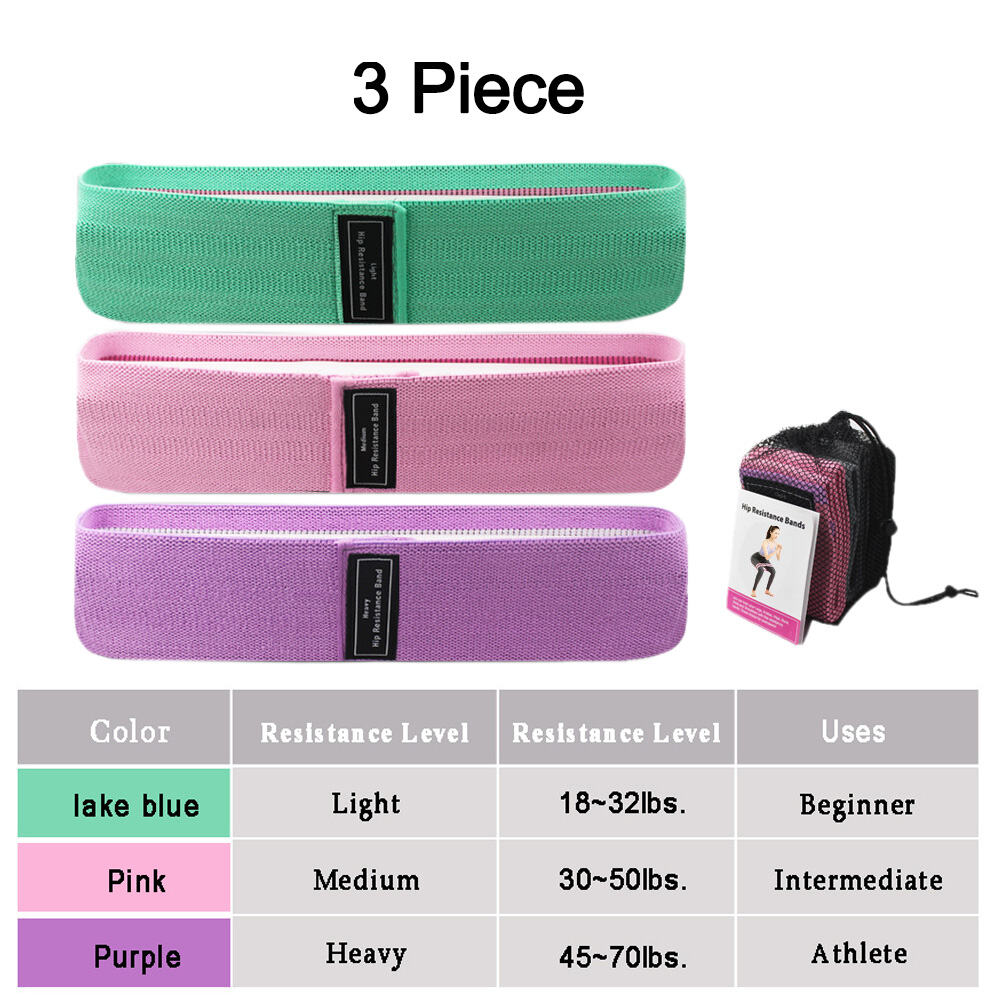
Lower body strength and stability form the foundation of athletic performance, injury prevention, and overall functional movement patterns. In the quest for effective training tools that deliver measurable results without requiring extensive equipment or gym memberships, hip bands have emerged as a game-changing solution for fitness enthusiasts, athletes, and rehabilitation specialists alike. These versatile resistance tools offer a unique approach to targeting the often-neglected muscle groups that are crucial for hip stability, glute activation, and proper biomechanical alignment.

The growing popularity of hip bands stems from their ability to provide targeted resistance training that activates stabilizing muscles while improving movement quality and strength simultaneously. Unlike traditional weight training that often focuses on primary movers, these resistance tools excel at engaging the smaller, stabilizing muscles around the hip joint that play critical roles in maintaining proper posture, preventing compensatory movement patterns, and enhancing overall athletic performance. Research consistently demonstrates that incorporating resistance band training into lower body workouts can significantly improve muscle activation patterns, particularly in the gluteus medius and gluteus minimus muscles that are essential for hip stability.
Understanding Hip Band Mechanics and Muscle Activation
Biomechanical Principles of Resistance Band Training
The effectiveness of hip bands lies in their unique ability to provide variable resistance throughout the entire range of motion, creating a resistance curve that challenges muscles differently than traditional weights. As the band stretches, the resistance increases exponentially, forcing the targeted muscles to work harder at the end ranges of motion where they are typically weakest. This variable resistance pattern closely mimics the strength curves of many lower body movements, making hip bands particularly effective for developing functional strength that translates directly to real-world activities and athletic performance.
The elastic properties of quality resistance bands create accommodating resistance, meaning the tension adjusts automatically to match the muscle's force production capabilities at different joint angles. This characteristic allows for optimal muscle activation throughout the entire movement while reducing the risk of injury that can occur with fixed resistance training methods. The continuous tension provided by hip bands also enhances proprioceptive feedback, improving the body's awareness of joint position and movement quality.
Targeted Muscle Group Activation
Hip bands excel at activating the gluteal complex, particularly the gluteus medius and minimus muscles that are responsible for hip abduction and stabilization. These muscles are notoriously difficult to activate effectively with traditional exercises, often becoming inhibited due to prolonged sitting and sedentary lifestyles. The lateral resistance provided by hip bands forces these stabilizing muscles to engage actively, helping to correct muscle imbalances and improve hip function.
Additionally, hip bands effectively target the hip external rotators, including the piriformis, gemelli, and obturator muscles, which play crucial roles in maintaining proper hip alignment and preventing internal rotation collapse during dynamic movements. The multidirectional resistance capabilities of these bands allow for comprehensive strengthening of all planes of hip movement, creating a more balanced and functional strength profile compared to single-plane exercises.
Strength Development Benefits of Hip Band Training
Progressive Overload and Strength Gains
One of the primary advantages of using hip bands for strength development is their ability to provide progressive overload through multiple mechanisms. Users can increase resistance by selecting bands with higher tension levels, combining multiple bands, or adjusting the pre-stretch of the band by changing hand or foot positioning. This versatility allows for systematic progression that accommodates users at all fitness levels, from rehabilitation patients to elite athletes.
Research indicates that resistance band training can produce strength gains comparable to traditional weight training when applied with appropriate intensity and progression protocols. The constant tension provided by hip bands creates a unique training stimulus that promotes both concentric and eccentric strength development while enhancing muscle endurance. This combination of strength and endurance adaptations is particularly beneficial for activities requiring sustained hip stability and control.
Functional Strength Transfer
The movement patterns facilitated by hip bands closely replicate the demands of many functional activities and sports movements, making the strength gains highly transferable to real-world applications. Unlike machine-based exercises that often isolate muscles in artificial movement patterns, hip band exercises promote integrated movement patterns that engage multiple muscle groups simultaneously while maintaining natural joint mechanics.
This functional approach to strength training helps develop the intermuscular coordination necessary for complex movement patterns such as cutting, jumping, and change of direction activities. The stabilization demands imposed by hip bands force the nervous system to develop more efficient motor control strategies, resulting in improved movement quality and performance in activities of daily living and athletic pursuits.
Stability Enhancement Through Hip Band Training
Core Integration and Postural Control
Hip band exercises naturally engage the core musculature as stabilizing muscles work to maintain proper alignment and control during resistance movements. This integration between hip and core stability creates a more comprehensive approach to developing the foundational strength necessary for optimal movement patterns. The unstable nature of elastic resistance challenges the proprioceptive system, forcing the core muscles to continuously adjust and adapt to maintain postural control.
The connection between hip stability and spinal alignment becomes particularly evident during hip band exercises, as proper form requires maintaining neutral spine positioning while generating force through the hip complex. This simultaneous challenge to both hip and core stability systems enhances the development of integrated stability patterns that are essential for injury prevention and optimal performance in both athletic and everyday activities.
Dynamic Balance and Proprioception
The elastic properties of hip bands create an inherently unstable training environment that challenges the proprioceptive system and enhances dynamic balance capabilities. Unlike static balance training on stable surfaces, hip band exercises require continuous adjustments and corrections to maintain proper form while generating force against the elastic resistance. This dynamic stability challenge improves the nervous system's ability to rapidly detect and correct movement deviations.
Enhanced proprioception through hip band training translates directly to improved performance in activities requiring quick direction changes, uneven terrain navigation, and reactive balance responses. The sensory feedback provided by the elastic resistance helps retrain movement patterns and can be particularly beneficial for individuals recovering from lower extremity injuries or those looking to prevent future injuries through improved movement quality.
Practical Applications and Exercise Progressions
Foundation Building Exercises
Beginning hip band training typically involves mastering fundamental movement patterns that establish proper hip mechanics and muscle activation patterns. Basic exercises such as lateral walks, clamshells, and glute bridges with band resistance provide an excellent foundation for developing hip strength and stability while teaching proper movement quality. These exercises can be performed with minimal space and equipment requirements, making them accessible for home workouts, travel, or rehabilitation settings.
The progression from basic to advanced exercises should follow a systematic approach that gradually increases complexity, resistance, and coordination demands. Starting with bilateral movements and progressing to unilateral challenges helps develop the strength and stability necessary for more advanced training protocols. Proper form and control should always be prioritized over resistance level, as movement quality is the foundation upon which strength and performance improvements are built.
Advanced Training Protocols
Advanced hip band training incorporates multi-planar movements, plyometric exercises, and sport-specific movement patterns that challenge the hip complex in ways that closely replicate real-world demands. Exercises such as lateral bounds with band resistance, single-leg deadlifts with abduction, and rotational movements combine strength, stability, and power development into comprehensive training protocols.
These advanced applications of hip band training can be integrated into existing workout programs to enhance overall training effectiveness without requiring additional equipment or time commitments. The versatility of hip bands allows for seamless integration into warm-up routines, strength training circuits, or dedicated mobility and activation sessions, making them valuable tools for optimizing training outcomes across various fitness goals and populations.
Scientific Evidence and Research Findings
Muscle Activation Studies
Electromyographic research consistently demonstrates that hip band exercises produce high levels of muscle activation in key stabilizing muscles, often exceeding the activation levels achieved through traditional exercises. Studies specifically examining gluteus medius activation show that lateral walking with hip bands can produce activation levels of 60-80% of maximum voluntary contraction, significantly higher than many common exercises performed without external resistance.
Comparative research between hip band exercises and traditional weight training methods reveals that while both approaches can improve strength, hip bands offer unique advantages in terms of muscle activation patterns and movement quality improvements. The constant tension provided by elastic resistance appears to enhance motor unit recruitment and promote more balanced muscle development compared to exercises that only provide resistance at specific points in the range of motion.
Performance and Injury Prevention Outcomes
Longitudinal studies examining the effects of hip band training on athletic performance consistently report improvements in measures such as jump height, agility, and movement efficiency. These performance improvements are often attributed to enhanced hip stability, improved gluteal function, and better intermuscular coordination developed through consistent hip band training protocols.
Research focusing on injury prevention outcomes shows that individuals who incorporate hip band training into their exercise routines experience lower rates of lower extremity injuries, particularly those related to hip and knee dysfunction. The emphasis on developing hip abductor strength and improving movement quality appears to address many of the underlying biomechanical factors that contribute to common sports injuries and overuse conditions.
Integration with Comprehensive Training Programs
Complementary Training Approaches
Hip bands serve as excellent complementary tools that enhance the effectiveness of traditional strength training programs without replacing fundamental exercises such as squats, deadlifts, and lunges. The incorporation of hip band exercises into warm-up routines helps activate key stabilizing muscles and prepare the hip complex for more intensive training sessions. This activation strategy can improve movement quality during subsequent exercises and reduce the risk of compensatory movement patterns.
The portability and versatility of hip bands make them ideal for addressing training gaps that may exist in traditional gym-based programs. They can be used for targeted activation work, corrective exercises, or high-repetition endurance training that complements heavier strength training sessions. This flexibility allows for more comprehensive programming that addresses all aspects of hip function and performance.
Periodization and Program Design
Effective integration of hip band training requires careful consideration of periodization principles and individual training goals. During preparatory phases, hip bands can be used extensively for movement preparation and corrective exercises. As training intensity increases, their role may shift toward activation and recovery work, while maintaining their importance for addressing specific weaknesses or imbalances.
The low impact nature of hip band exercises makes them suitable for inclusion during high-intensity training phases when recovery between sessions is crucial. Their ability to provide training stimulus without imposing significant mechanical stress on joints and connective tissues allows for consistent training frequency that supports ongoing adaptation and improvement.
FAQ
How often should I use hip bands for optimal strength and stability improvements
For optimal results, hip band training should be performed 3-4 times per week, with sessions lasting 15-30 minutes depending on your fitness level and goals. Beginners should start with 2-3 sessions per week to allow adequate recovery time, while more advanced users can incorporate hip band exercises daily as part of warm-up routines or corrective exercise protocols. The key is consistency rather than intensity, as the neuromuscular adaptations that improve stability develop gradually over time with regular practice.
Can hip bands replace traditional weight training for lower body development
While hip bands are highly effective for developing stability, activation, and muscular endurance, they should complement rather than completely replace traditional weight training for comprehensive lower body development. Hip bands excel at targeting smaller stabilizing muscles and improving movement quality, while traditional weights are superior for developing maximum strength and muscle mass. The ideal approach combines both methods, using hip bands for activation, stability work, and corrective exercises while maintaining traditional exercises for primary strength development.
What resistance level should I choose when starting with hip bands
Beginners should start with light to medium resistance levels that allow for proper form execution throughout 12-15 repetitions of basic exercises. The resistance should feel challenging during the last few repetitions while maintaining movement quality and control. Most manufacturers provide resistance level guidelines, but individual strength levels vary significantly, so it's better to start conservatively and progress gradually. A set with multiple resistance levels allows for appropriate progression as strength and stability improve over time.
How long does it typically take to see improvements in lower body strength and stability
Most individuals begin experiencing improvements in muscle activation and movement quality within 2-3 weeks of consistent hip band training, with more noticeable strength gains typically occurring after 4-6 weeks of regular practice. Stability improvements often become apparent sooner than strength gains, as the neuromuscular system adapts quickly to the stability challenges imposed by elastic resistance. Significant improvements in functional performance and injury prevention benefits typically develop over 8-12 weeks of consistent training, though individual results vary based on starting fitness level, training frequency, and program design.
Table of Contents
- Understanding Hip Band Mechanics and Muscle Activation
- Strength Development Benefits of Hip Band Training
- Stability Enhancement Through Hip Band Training
- Practical Applications and Exercise Progressions
- Scientific Evidence and Research Findings
- Integration with Comprehensive Training Programs
-
FAQ
- How often should I use hip bands for optimal strength and stability improvements
- Can hip bands replace traditional weight training for lower body development
- What resistance level should I choose when starting with hip bands
- How long does it typically take to see improvements in lower body strength and stability